
Why Doesn’t My Dog Respond to His Name? 9 Reasons & How to Fix It
You call your dog by name. Nothing happens.
You try again. Your dog continues sniffing the floor, watching something outside, or playing with a favorite toy.
But when you open a bag of treats, suddenly you have their full attention.
Sound familiar?
If your dog doesn’t respond to their name, you might wonder whether they’re ignoring you on purpose, haven’t learned their name, or simply don’t understand what you’re asking.
The good news is that a dog not responding to their name doesn’t automatically mean they’re stubborn or poorly trained.
There are several possible explanations, from inconsistent training to distractions, stress, or even hearing difficulties.
In this guide, we’ll explore nine common reasons dogs don’t respond to their names, explain how to identify the problem, and share a simple positive-reinforcement training plan you can practice at home.
Does Your Dog Actually Know Their Name?
Before trying to fix the problem, it’s important to understand what recognizing a name means to a dog.
Humans understand names as labels for individuals. Dogs can learn to recognize the sound of their names through repeated experiences and associations.
For example, your dog might learn that hearing “Charlie” means something interesting could happen.
They might turn their head, look toward you, move their ears, or approach you.
But recognizing their name and reliably responding to it are two different skills.
A dog may know their name perfectly well and still fail to respond when distracted.
Signs Your Dog Recognizes Their Name
Your dog may already recognize their name if they:
- Turn their head when you say it.
- Look toward you after hearing it.
- Move their ears or briefly pause what they’re doing.
- Respond more reliably in quiet places.
- Show excitement when you say their name in a positive tone.
If your dog responds at home but ignores you outside, the problem may be distractions rather than name recognition.
If your dog rarely reacts to their name, even in a quiet environment, they may need more training or an evaluation for a hearing-related issue.
9 Reasons Your Dog Doesn’t Respond to Their Name
1. Your Dog Hasn’t Learned Their Name Yet
This is particularly common with puppies and newly adopted dogs.
Your puppy might hear their name dozens of times throughout the day without understanding that the sound is meant to get their attention.
Simply repeating a name doesn’t necessarily teach a dog what to do when they hear it.
How to fix it:
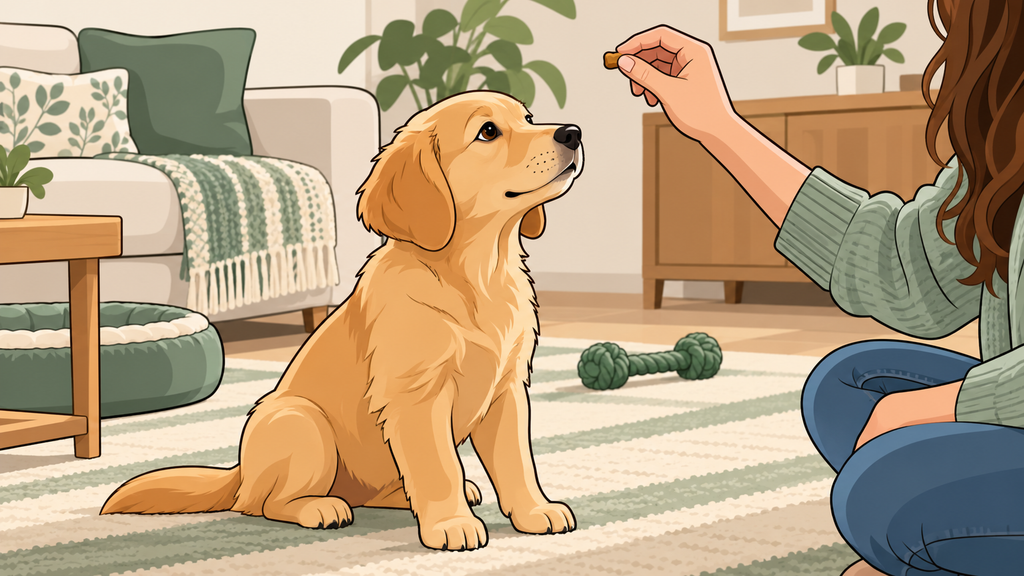
Start in a quiet room with a few small treats.
- Wait until your puppy is not already looking at you.
- Say their name once in a cheerful voice.
- When they look toward you, immediately say “Yes!” and give them a treat.
- Repeat a few times, allowing a short break between repetitions.
If your puppy doesn’t respond, make the exercise easier by reducing distractions or briefly using a gentle sound to attract their attention. Reward them when they look at you, then gradually return to using their name alone.
Keep the experience enjoyable rather than turning it into a test.
2. You Only Use Their Name When Something Bad Happens
Imagine hearing your name only when someone is upset with you.
You might eventually become reluctant to respond.
Dogs can also develop associations between particular sounds and unpleasant experiences.
For example, if you mainly use your dog’s name when scolding them, interrupting play, or ending a walk, their name may begin to predict something they dislike.
How to fix it:
Create positive experiences around your dog’s name.
Say their name before offering a treat, starting a game, or giving gentle attention when they welcome it.
Avoid using their name as a reprimand.
Your goal is for your dog to think:
When I hear my name, paying attention to my person is worthwhile.
3. You Repeat Your Dog’s Name Too Often
“Buddy! Buddy! Buddy! BUDDY!”
If you regularly repeat your dog’s name without getting a response, the sound may gradually lose its significance.
Your dog may learn that hearing their name doesn’t always require attention or predict anything meaningful.
How to fix it:
Say your dog’s name once.
Pause briefly and give them a chance to respond.
If they don’t, avoid repeating it louder and louder. Instead, reduce distractions, move closer, or make the exercise easier.
Reward successful responses.
The goal is to teach your dog that the first time you say their name matters.
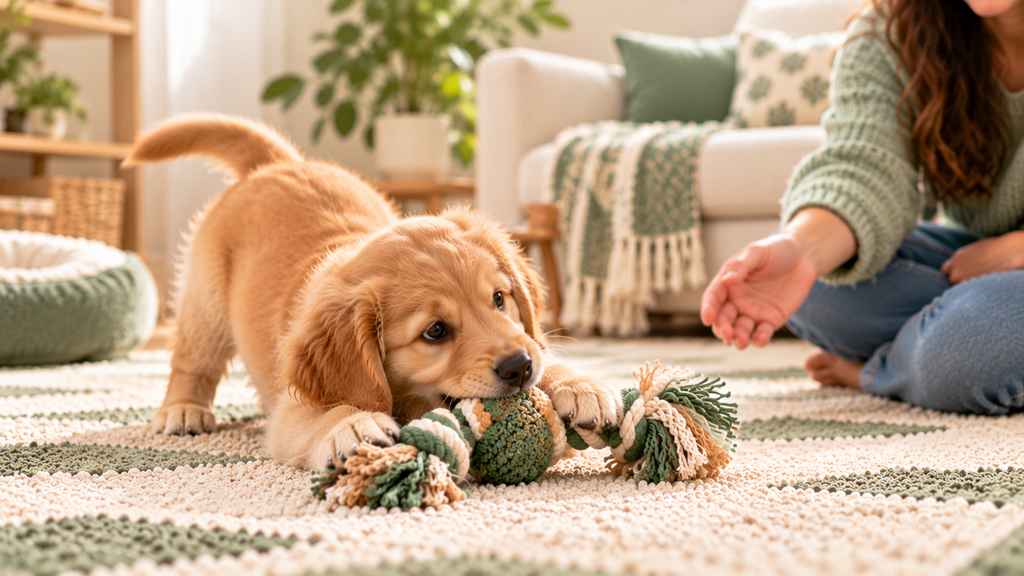
4. You Use Too Many Different Nicknames
Your dog’s name is Charlie.
But sometimes you call them Charles, Char-Char, Little Bear, or Fluffy.
Nicknames aren’t necessarily a problem. Dogs can learn multiple words and sounds.
However, if you’re teaching a puppy their name for the first time, constantly switching between names may make the learning process less consistent.
How to fix it:
Choose one main name for training.
Ask everyone in the household to use it consistently during practice.
Once your dog responds reliably, you can introduce affectionate nicknames without necessarily causing confusion.
5. Your Dog’s Name Sounds Similar to Another Word
Some dog names sound very similar to common commands.
For example, “Kit” may resemble “sit,” while “Bo” may sound like “no.”
This doesn’t mean these names are impossible to train.
However, similar-sounding words may be harder to distinguish in certain situations, particularly when spoken quickly or from a distance.
How to fix it:
Use a clear, consistent pronunciation.
If your dog repeatedly confuses their name with another cue, consider changing the cue word or using a distinctive nickname.
You don’t automatically need to rename your dog.
6. Your Dog Is Too Distracted to Listen
Your dog responds perfectly in the living room.
But at the park?
Nothing.
There are unfamiliar dogs, interesting smells, moving people, birds, and countless other things competing for their attention.
This is completely normal.
A dog that responds in one environment hasn’t necessarily learned to perform the same behavior everywhere.
How to fix it:
Increase distractions gradually.
Start in a quiet room, then practice in another part of your home, your garden, and eventually a calm outdoor location.
Reward your dog for turning toward you when they hear their name.
Use a leash or long line where appropriate to keep training safe.
Don’t expect your puppy to perform equally well in a busy park before they’ve practiced in easier environments.
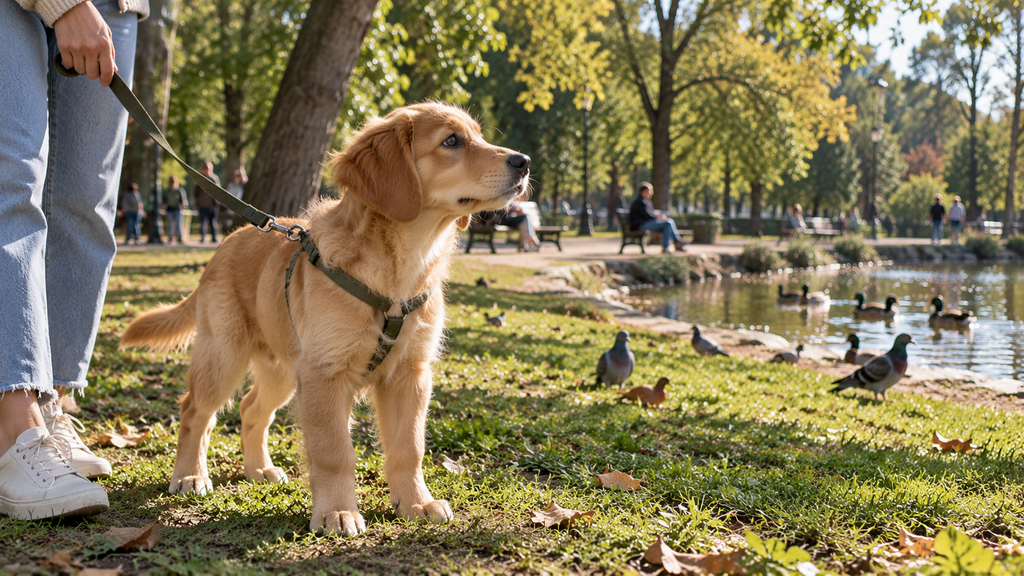
7. Your Dog Thinks Their Name Means Playtime Is Over
Picture this:
Your dog is enjoying an exciting game at the park.
You call their name, bring them back, attach the leash, and immediately leave.
If this happens regularly, your dog may begin to associate responding with losing access to something enjoyable.
How to fix it:
Practice calling your dog’s name during activities that don’t have to end.
Reward them for looking toward you, then allow them to continue playing when it’s safe.
Sometimes call them over, reward them, and release them back to their activity.
This teaches your dog that paying attention doesn’t always mean the fun is over.
Remember that name recognition and recall are separate skills. Your dog’s name should get their attention, while a cue such as “come” tells them to approach you.
8. Your Dog Is Stressed, Tired, or Overwhelmed
Dogs don’t respond equally well in every situation.
A puppy who is exhausted after a busy day may struggle to concentrate.
Similarly, a frightened or overwhelmed dog may focus on what’s happening around them instead of responding to familiar cues.
How to fix it:
Pay attention to your dog’s body language.
If they appear frightened, tense, or overstimulated, don’t insist on continuing the exercise.
Move to a calmer environment, give them time to settle, and practice when they’re comfortable.
Training works best when your dog feels safe and is able to concentrate.
9. Your Dog May Have Difficulty Hearing
Sometimes the problem isn’t training.
If your dog suddenly stops responding to their name or other familiar sounds, hearing difficulties may be a possible explanation.
Age-related hearing loss, ear problems, and other medical conditions can affect how dogs respond to sound.
Signs worth discussing with a veterinarian include:
- Suddenly failing to react to familiar sounds.
- Not responding when called from behind.
- Becoming unusually startled when touched.
- Sleeping through noises that previously woke them.
- Frequently shaking their head or showing signs of ear discomfort.
If you notice a sudden change, arrange a veterinary examination rather than assuming your dog is ignoring you.
Don’t attempt to test hearing with extremely loud noises close to your dog’s ears.
How to Retrain Your Dog to Respond to Their Name
If your dog has learned to ignore their name, you can work on rebuilding a positive association.
You don’t necessarily need to choose a completely new name.
Instead, focus on teaching a clear behavior: when your dog hears their name, they turn their attention toward you.
Step 1: Start Somewhere Quiet
Choose a calm room without exciting toys, visitors, or other distractions.
Have a few small, dog-safe treats ready.
Step 2: Say Your Dog’s Name Once
Use a friendly, natural tone.
For example:
“Charlie!”
Avoid shouting or repeatedly calling.
Step 3: Reward Attention
As soon as your dog looks toward you, mark the behavior with “Yes!” or a clicker and give them a treat.
Timing matters.
Reward the response promptly so your dog can connect the behavior with the positive outcome.
Step 4: Keep Sessions Short
Practice for approximately two to three minutes at a time, depending on your dog’s interest and attention span.
Several enjoyable, short sessions are usually more practical than one long, frustrating session.
Step 5: Practice in Different Environments
Once your dog responds reliably in a quiet room, gradually introduce mild distractions.
If their response becomes inconsistent, return to an easier setting.
Step 6: Gradually Vary the Rewards
Food rewards are helpful when teaching a new skill.
As your dog’s response improves, you can sometimes use praise, play, or another reward your dog enjoys.
Continue rewarding particularly good responses, especially in distracting environments.
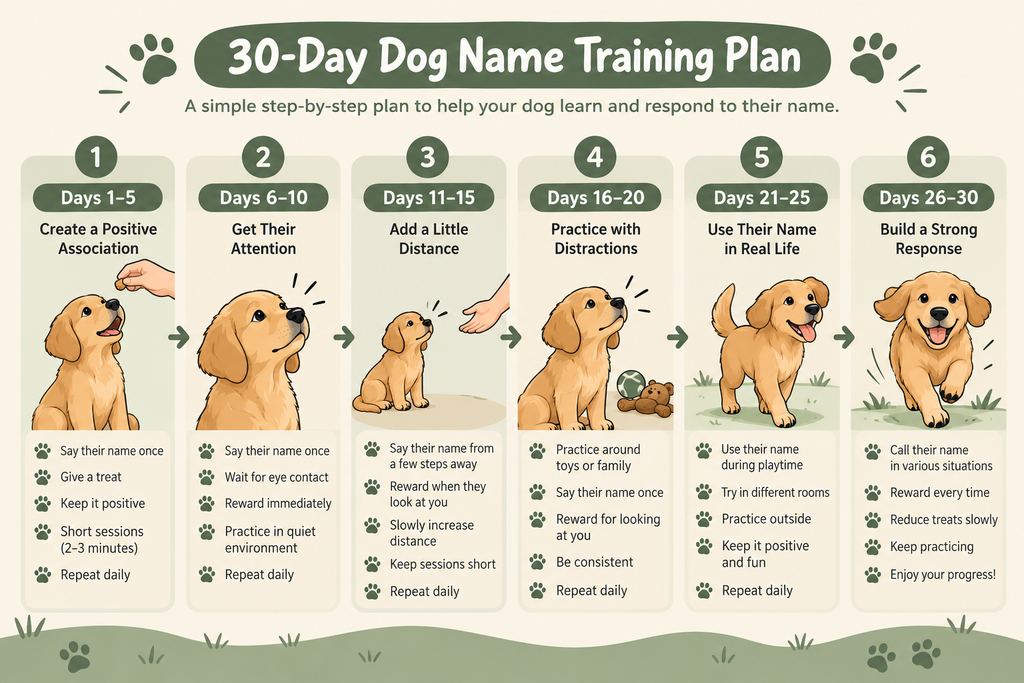
A Simple 30-Day Dog Name Training Plan
Every dog learns at a different pace.
Some dogs may show improvement after a few sessions, while others need several weeks of consistent practice.
This 30-day plan provides a gradual structure, not a guarantee that every dog will respond perfectly by the end of the month.
| Days | Training focus | Goal |
|---|---|---|
| 1–5 | Quiet-room practice | Build a positive association with the name |
| 6–10 | Different rooms at home | Improve consistency indoors |
| 11–15 | Mild household distractions | Practice turning attention away from distractions |
| 16–20 | Calm outdoor environments | Introduce new sights and sounds |
| 21–25 | Moderate distractions | Strengthen attention in different locations |
| 26–30 | Mixed real-life situations | Maintain the response across familiar environments |
How to Use the Plan
Practice for a few minutes, once or twice daily, if your dog is comfortable and engaged.
Only increase the difficulty when your dog is responding reliably at the current level.
If they struggle, simplify the exercise rather than pushing ahead simply because you’ve reached a particular day.
For puppies, newly adopted dogs, or dogs with a history of stressful experiences, progress may take longer.
Should You Change Your Dog’s Name?
Usually, no.
If your dog has a reasonably distinct name, the first step should be improving how you teach and use it.
However, changing a name can make sense in some circumstances.
For example, you might consider a new name if:
- The existing name sounds very similar to a frequently used command.
- The dog has an unpleasant history associated with their old name.
- You’ve recently adopted a dog and prefer a different name.
Dogs can learn new names through consistent, positive associations.
If you decide to rename your dog, introduce the new name using the same reward-based training method.
Avoid frequently switching between old and new names during early training.
Common Mistakes to Avoid
Even well-meaning dog owners sometimes make name training harder than necessary.
Here are a few habits worth avoiding:
- Repeating the name constantly: Say it once, then make the exercise easier if needed.
- Using the name to scold: Keep the name associated with positive or neutral interactions.
- Expecting instant results outdoors: Practice gradually around distractions.
- Using the name as a recall command: Teach “come” separately.
- Continuing when the dog is stressed: Stop and try again in a calmer setting.
- Rewarding too late: Mark the moment your dog looks toward you.
- Changing the training rules every day: Keep your approach consistent.
Frequently Asked Questions
Why does my dog ignore me when I call their name?
Your dog may be distracted, may not have fully learned their name, or may have developed a weak association with responding. Stress, hearing problems, and inconsistent training can also contribute.
Does my dog know their name but choose to ignore me?
Possibly. A dog may recognize their name without responding reliably in every environment. This doesn’t necessarily mean they’re deliberately being disobedient.
How long does it take a dog to learn their name?
There is no universal timeline. Some dogs begin responding after a few short sessions, while reliable responses in distracting environments may require weeks or longer.
Is it too late to teach an older dog their name?
No. Older dogs can learn new associations and behaviors. Adjust the training to their abilities, comfort, and health.
Should I repeat my dog’s name until they look at me?
It’s generally better to say the name once, allow a moment for a response, and reduce the difficulty if they don’t respond. Repeatedly saying the name without a meaningful outcome can make training less effective.
Why does my puppy respond to their name only when I have treats?
Your puppy may still be learning the behavior or may have learned to respond only when food is visible. Keep treats out of sight until after the response, then reward. Gradually introduce other rewards as the behavior becomes more reliable.
Can I teach my dog a new name?
Yes. Dogs can learn to respond to a new name when it’s introduced consistently and associated with positive experiences.
Final Thoughts: Make Your Dog’s Name Worth Responding To
If your dog doesn’t respond to their name, the solution usually isn’t to call louder or repeat the name more often.
Instead, try to understand why they’re struggling.
Maybe the environment is too distracting. Maybe their name has become associated with unpleasant experiences. Or perhaps they simply haven’t had enough consistent practice.
By using positive reinforcement, practicing in manageable environments, and rewarding attention, you can help your dog develop a more reliable response.
And remember, progress doesn’t need to happen overnight.
Start with one short, enjoyable training session today.
For more practical advice, explore our dog name training guides and dog-naming tips at Olei.net.
Have you ever had a dog who seemed to ignore their name? Share your experience in the comments and tell us what helped.
More Ways to Enjoy Life with Your Dog
Discover helpful dog-naming guides, creative inspiration, and thoughtful finds for dog lovers.
More Dog Name Inspiration
Explore more guides and ideas to help you find the perfect name for your best friend.

How Do Dogs and Puppies Recognize Their Names? The Science Behind It
How Do Dogs and Puppies Recognize Their Names? The Science Behind It Have you ever called your dog by…
Read Article
How to Teach a Puppy Its Name: Easy Steps + Free 30-Day Training Tracker
How to Teach a Puppy Its Name: Easy Steps + Free 30-Day Training Tracker You’ve finally chosen the perfect…
Read Article
Dog Name Lab
Explore name ideas, discover different naming styles, and find inspiration for your dog’s perfect name.
Explore Name Lab
The Olei Shop
Discover dog-inspired products, thoughtful gifts, and fun finds for you and your four-legged companion.
Explore the Shop