
How to Teach a Puppy Its Name: Easy Steps + Free 30-Day Training Tracker
You’ve finally chosen the perfect name for your new puppy. Maybe it’s Milo, Bella, Charlie, or something completely unique. But there’s one little problem: your puppy doesn’t know their name yet!
You call “Milo!” and your puppy keeps playing with their toy. You try again, maybe a little louder, but nothing happens.
Don’t worry. Puppies aren’t born knowing their names. They need to learn that hearing a particular word means something good is about to happen.
Teaching your puppy their name is one of the first and most useful training exercises you can practice together. It helps you get their attention, communicate more clearly, and prepare for important skills such as coming when called.
In this guide, you’ll learn how to teach a puppy its name step by step, which mistakes to avoid, and how to build a consistent routine using our free 30-Day Puppy Name Training Tracker.
The best part? You only need a few minutes of positive training at a time.
What Does It Mean When a Puppy Knows Its Name?
Before starting, it’s helpful to understand what you’re actually teaching.
Your puppy doesn’t need to understand their name the way a person understands theirs.
Instead, you’re teaching them a simple association:
“When I hear this sound, paying attention to my owner leads to something good.”
At first, a successful response might be as simple as your puppy turning their head toward you.
As they improve, they may look directly at you or approach you when you call.
These are related behaviors, but they aren’t exactly the same.
Name recognition means your puppy responds by directing their attention toward you.
Recall training means your puppy comes to you when called, even when something interesting is happening nearby.
It’s best to teach name recognition first and gradually build toward more advanced skills.
When Should You Start Teaching a Puppy Its Name?
You can begin teaching your puppy their name as soon as they arrive home and feel comfortable in their new environment.
Even an 8-week-old puppy can begin learning through simple, reward-based exercises.
However, young puppies have short attention spans and are still discovering the world around them.
For that reason, keep early training sessions short and enjoyable.
You don’t need to spend 30 minutes practicing at once. A few successful repetitions during everyday activities can be more useful than a long session.
For example, you can practice before breakfast, during playtime, or when your puppy is relaxed and interested in interacting with you.
What You’ll Need to Teach Your Puppy Its Name
You don’t need expensive equipment or professional training tools to get started.
Here are a few useful items:
- Small training treats: Choose soft, puppy-safe treats that are easy to eat.
- Regular puppy food: A portion of your puppy’s daily kibble can work as a reward.
- A favorite toy: Useful for turning training into a fun game.
- A quiet space: Start somewhere without too many distractions.
- A comfortable leash or harness: Helpful when practicing in secure outdoor areas.
- A training tracker: Use our free printable to record your puppy’s progress.
Keep rewards small and account for treats as part of your puppy’s daily food intake.
Now you’re ready to begin.
Step 1: Make Your Puppy’s Name Something Positive
The first step is simple: teach your puppy that hearing their name predicts something enjoyable.
Start in a quiet room with a few small treats ready.
Here’s what to do:
- Sit or stand near your puppy.
- Say their name once in a happy, natural voice.
- Immediately give them a small treat.
- Pause briefly and repeat a few times.
For example:
You: “Milo!”
Puppy: Receives a tasty treat.
At this stage, don’t worry if your puppy doesn’t look at you. You’re building the association between the name and the reward.
You can also use a portion of their regular breakfast or dinner for this exercise.
After several positive repetitions, your puppy may begin turning toward you as soon as they hear their name.
That’s a great first sign of progress!
Step 2: Reward Your Puppy for Looking at You
Once your puppy has begun associating their name with rewards, it’s time to teach a specific response.
This time, wait until your puppy is looking slightly away from you.
Say their name once.
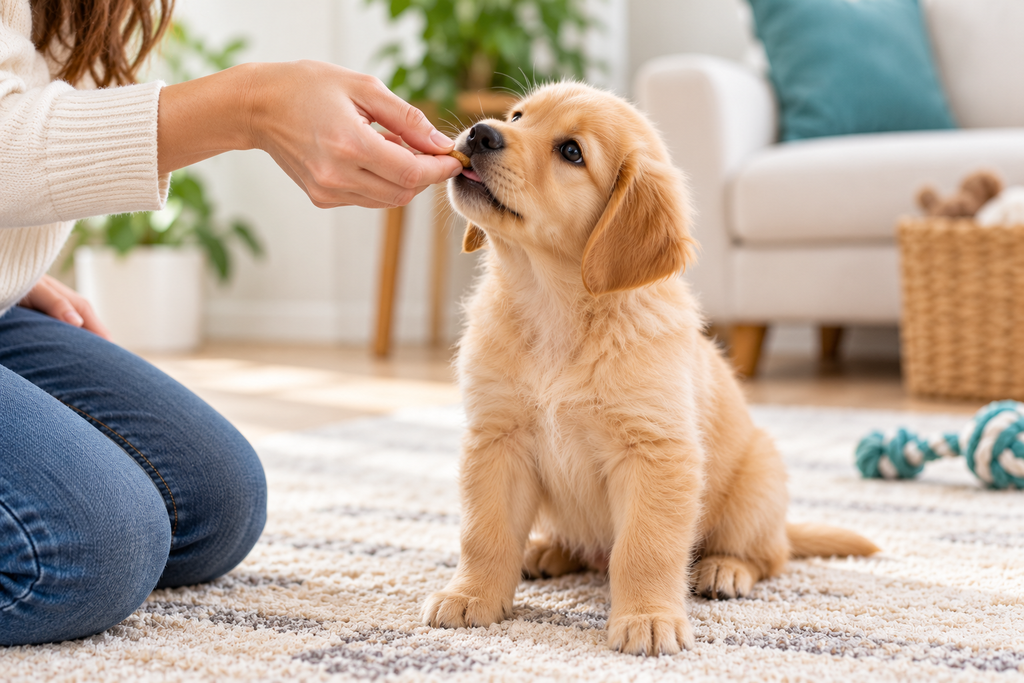
If they turn toward you, immediately say “Yes!” and give them a treat.
The word “Yes!” is called a reward marker. It helps your puppy understand exactly which action earned the reward.
The sequence looks like this:
Say name → Puppy looks toward you → Say “Yes!” → Give reward
Practice several times in a quiet environment.
If your puppy doesn’t respond, avoid repeating their name again and again.
Instead, wait for a better opportunity, move closer, or return to the easier name-and-treat exercise.
The goal is to help your puppy succeed, not to test them before they’re ready.
Step 3: Encourage Your Puppy to Come Toward You
Now that your puppy is beginning to recognize their name, you can introduce a little movement.
Start just a short distance away.
Say your puppy’s name once in an enthusiastic voice.
When they look toward you, take a few steps backward and encourage them to follow.
As they approach, praise them and reward them when they reach you.
You can initially guide them with a treat if they need help understanding the game.
Over time, try calling their name without showing the treat first.
Reward them when they reach you, preferably close to your legs.
This helps your puppy learn that approaching you is a positive experience.
Step 4: Make Name Training a Fun Game
Training shouldn’t feel like a chore for you or your puppy.
One of the easiest ways to keep your puppy interested is to turn name practice into a game.
The Puppy Name Chase Game
Start in a safe, enclosed space.
Let your puppy explore for a moment.
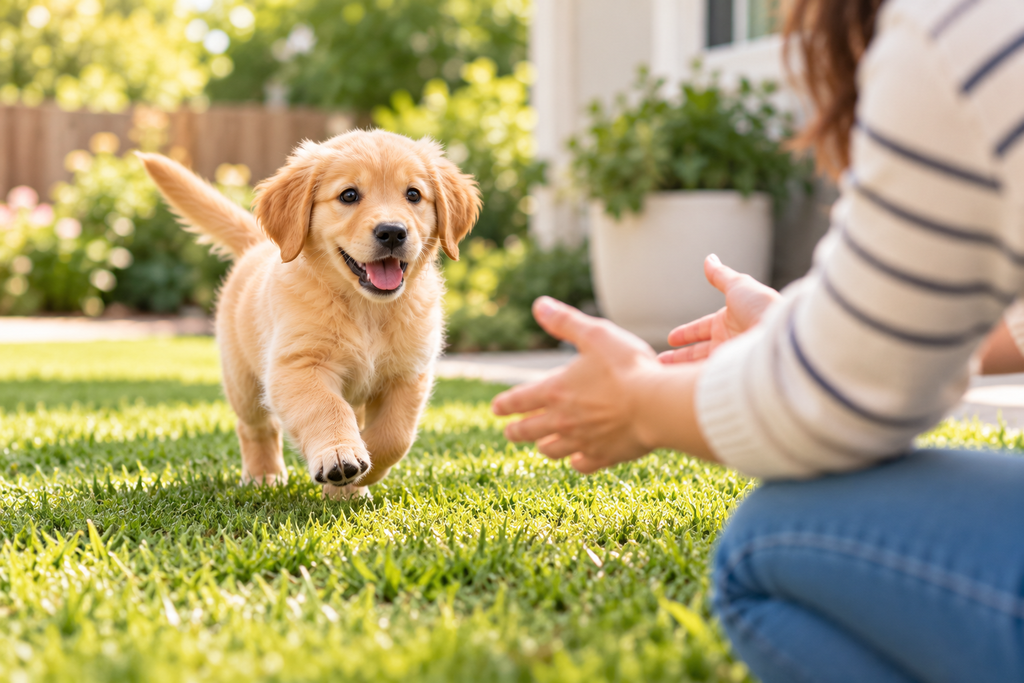
Say their name once, then move a few steps away.
When your puppy follows, reward them with a treat, praise, or a short play session.
Your movement can make the interaction more exciting and encourage your puppy to approach.
The Two-Person Name Game
You can also involve another family member.
Have one person stay near the puppy while the other moves a short distance away.
The second person calls the puppy’s name and rewards them for approaching.
Keep the distance short and the environment calm.
This game can help your puppy become comfortable responding to different family members.
Remember that name recognition and recall are separate skills. These games introduce coming toward you, but reliable recall will require additional training.
Step 5: Introduce Small Distractions
Your puppy may respond beautifully in your living room but completely ignore you when they discover an interesting toy.
That’s normal.
Puppies are naturally curious, and new sights, smells, and sounds can easily capture their attention.
The next step is to practice around mild distractions.
Start by placing a familiar toy on the floor.
Let your puppy notice it, then say their name once.
When they turn toward you, say “Yes!” and reward them.
If the toy is too exciting, increase the distance or choose something less interesting.
You can also practice in another quiet room or in a secure garden.
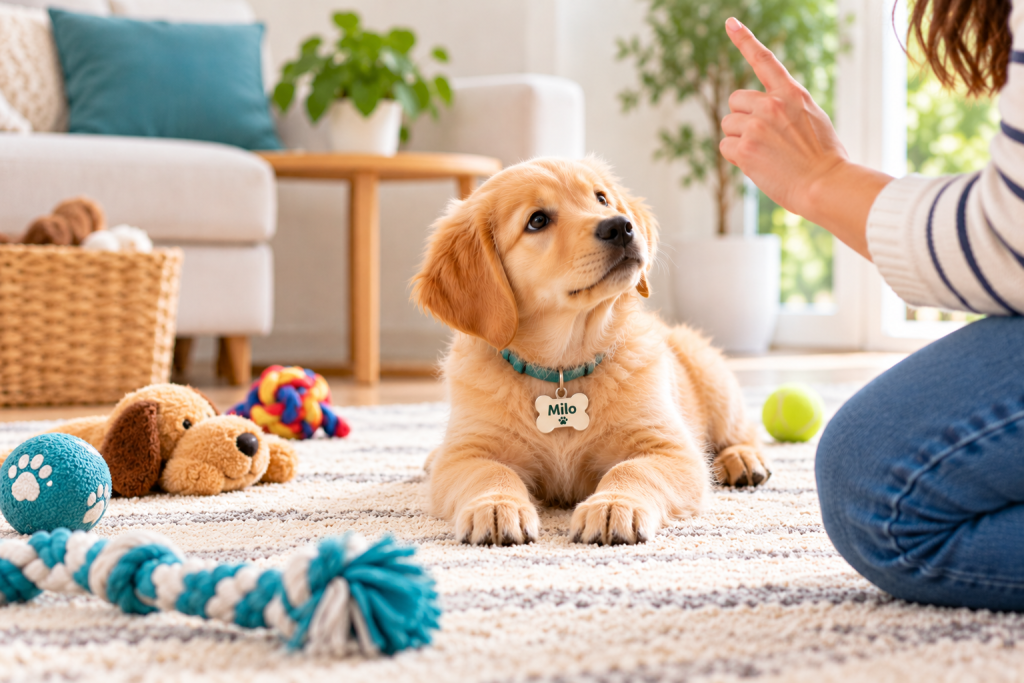
As your puppy improves, gradually increase the difficulty.
Don’t rush into training around other dogs, busy roads, or crowded parks.
Your puppy should have plenty of successful experiences before facing more challenging environments.
Step 6: Practice Without Showing the Treat First
Treats are useful for teaching new behaviors, but you don’t want your puppy to respond only when they see food.
Once they understand the exercise, start keeping the treats hidden.
Here’s how:
- Put a few treats in your pocket or treat pouch.
- Wait until your puppy is calmly looking elsewhere.
- Say their name once.
- Mark the moment they look toward you with “Yes!”
- Take out a treat and reward them.
This teaches your puppy that responding to their name can lead to a reward even when food isn’t visible.
You can gradually introduce other rewards, such as a favorite toy, praise, or a short game.
Continue rewarding frequently while the behavior is developing.
Step 7: Practice in Different Environments
Once your puppy responds consistently at home, begin practicing in other safe locations.
Dogs don’t automatically understand that a cue they’ve learned in one place means the same thing everywhere.
Start with easy changes.
You might practice in another room, your garden, or a quiet outdoor area.
As your puppy becomes more confident, introduce slightly more challenging environments.
Always prioritize safety.
Use a leash or secure enclosure when necessary, and avoid practicing off-leash in an unfenced area.
If your puppy struggles, return to an easier environment and rebuild their confidence.
5 Common Mistakes When Teaching a Puppy Its Name
Even when owners have good intentions, certain habits can make puppy name training more difficult.
1. Repeating Your Puppy’s Name Too Often
One of the most common mistakes is calling a puppy’s name repeatedly.
“Milo! Milo! Milo!”
If your puppy regularly hears their name without responding or receiving reinforcement, the sound may become less meaningful.
Instead, say their name once and help them succeed.
2. Using Their Name When You’re Angry
Avoid using your puppy’s name primarily when you’re frustrated or about to scold them.
You want their name to predict positive attention rather than something unpleasant.
If you need to interrupt unwanted behavior, calmly redirect your puppy and reward an appropriate alternative.
3. Training Around Too Many Distractions
A puppy who has just learned their name indoors may not respond in a busy park.
That’s not necessarily disobedience.
It often means the environment is more challenging than their current training level.
Start with easy situations and gradually increase distractions.
4. Always Showing Food Before Calling
If your puppy only responds when they see a treat, they may be following the food rather than responding to their name.
Use food to help during early training, but gradually keep rewards hidden until after the correct response.
5. Making Training Sessions Too Long
Young puppies can become tired, distracted, or frustrated.
Stop while your puppy is still enjoying the activity.
A few positive repetitions are better than continuing until your puppy loses interest.
How Long Does It Take a Puppy to Learn Its Name?
There’s no exact number of days that works for every puppy.
Some puppies begin recognizing their names after a handful of short training sessions.
Others need several weeks of consistent practice, particularly when learning to respond around distractions.
Progress depends on factors such as age, previous experiences, motivation, consistency, and the environment.
A puppy might respond reliably at home long before they can do the same in a busy outdoor setting.
Instead of focusing on a deadline, look for gradual improvements.
Does your puppy turn toward you more often? Can they respond without seeing a treat? Are they becoming more attentive in different locations?
Those are useful signs that training is working.
Free Printable: 30-Day Puppy Name Training Tracker
Teaching your puppy their name takes consistency, patience, and plenty of positive reinforcement.
To help you stay organized, we’ve created a Free 30-Day Puppy Name Training Tracker that you can print and use at home.
It’s designed for new puppy owners who want a simple way to practice and record progress.
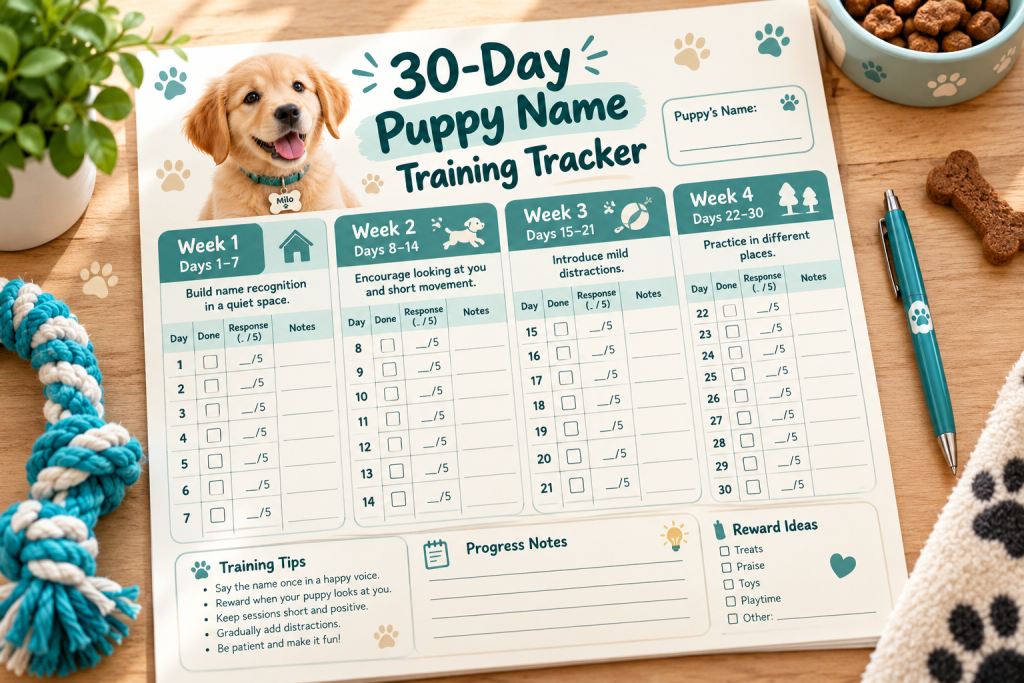
What’s Included?
The printable features:
- A 30-day training checklist.
- Four progressive training stages.
- Space to record successful responses.
- Daily completion checkboxes.
- A section for notes and observations.
Download Free 30-Day Puppy Name Training Tracker PDF
US Letter sizes. Free for personal use.
How to Use the Tracker
Choose a quiet moment when your puppy is comfortable and interested in training.
Practice saying their name once and rewarding the correct response.
When your puppy is ready, try up to five repetitions in a session.
Record how many times they respond to the first call.
For example, if your puppy responds four times out of five, write 4/5.
If your puppy becomes tired or distracted, stop early. You don’t need to complete five repetitions every day.
Use the notes section to record anything useful, such as which treats worked best or which distractions were difficult.
Remember that the purpose of the tracker is to help you recognize progress, not pressure your puppy to achieve perfect scores.
Your 30-Day Puppy Name Training Plan
We’ve divided the plan into four simple stages.
These are suggested practice periods rather than strict deadlines. Repeat any stage until your puppy is comfortable before moving forward.
Week 1: Days 1–7 — Build Name Recognition
Focus on helping your puppy associate their name with positive experiences.
Practice in a quiet room.
Say their name once and immediately reward them.
As they begin responding, reward them for turning toward you.
Your goal: Help your puppy develop a positive association with their name.
Week 2: Days 8–14 — Build Attention and Movement
Continue rewarding your puppy for looking toward you.
Introduce short movement games and encourage them to approach you.
Keep the distance small and the experience enjoyable.
Your goal: Encourage your puppy to pay attention and approach willingly.
Week 3: Days 15–21 — Introduce Mild Distractions
Begin practicing with a familiar toy nearby or in another quiet room.
Gradually stop showing the treat before calling your puppy’s name.
Continue rewarding successful responses.
Your goal: Help your puppy respond without needing to see food first.
Week 4: Days 22–30 — Practice in Different Places
Continue practicing in safe, gradually more challenging environments.
Try another room, a quiet garden, or a calm outdoor area.
Use appropriate supervision and a leash where necessary.
Your goal: Build a more consistent response across different environments.
What Should Your Puppy Know After 30 Days?
After a month of positive practice, you may notice several improvements.
Your puppy might recognize their name more consistently, turn toward you when called, and respond even when a mild distraction is present.
However, some puppies will need additional time, and that’s completely normal.
The 30-day plan is a helpful training framework, not a promise that every puppy will master the skill in one month.
Continue practicing at your puppy’s pace.
Frequently Asked Questions About Puppy Name Training
Can an 8-week-old puppy learn its name?
Yes. You can begin teaching an 8-week-old puppy to recognize their name through short, gentle, reward-based exercises.
How many times a day should I practice?
A few short sessions spread throughout the day are a good starting point. Keep them brief and stop when your puppy loses interest.
What if my puppy ignores its name?
Move to a quieter location and return to an easier exercise. Avoid repeatedly calling their name or raising your voice. If your puppy consistently doesn’t react to sounds, consult your veterinarian about possible hearing concerns.
Should I use my puppy’s name before every command?
You can use their name to get their attention before giving a cue, but avoid repeating it unnecessarily. Your puppy’s name should remain a meaningful attention signal.
Can I change my puppy’s name?
Yes. Puppies and adult dogs can learn new names. Use the new name consistently and create positive associations with rewards and play.
Can I teach two puppies their names at the same time?
Yes, but begin with separate training sessions so each puppy can learn their own name without distractions from the other. Once both respond reliably, you can gradually practice together.
Does my puppy need to come to me when I say its name?
Not necessarily. The first goal is for your puppy to look toward you when they hear their name. Coming when called is a separate skill that should also be trained.
Final Thoughts
Teaching your puppy their name is one of the simplest ways to begin building positive communication together.
Start by associating their name with something enjoyable. Reward them for paying attention, introduce playful movement, and gradually practice around distractions.
Be patient, celebrate small improvements, and keep training fun.
And don’t forget to download our Free 30-Day Puppy Name Training Tracker to help you organize your practice sessions and follow your puppy’s progress.
Happy training!
More Ways to Enjoy Life with Your Dog
Discover helpful dog-naming guides, creative inspiration, and thoughtful finds for dog lovers.
More Dog Name Inspiration
Explore more guides and ideas to help you find the perfect name for your best friend.
Why Doesn’t My Dog Respond to His Name? 9 Reasons & How to Fix It
Why Doesn’t My Dog Respond to His Name? 9 Reasons & How to Fix It You call your dog…
Read Article
How Do Dogs and Puppies Recognize Their Names? The Science Behind It
How Do Dogs and Puppies Recognize Their Names? The Science Behind It Have you ever called your dog by…
Read Article
Dog Name Lab
Explore name ideas, discover different naming styles, and find inspiration for your dog’s perfect name.
Explore Name Lab
The Olei Shop
Discover dog-inspired products, thoughtful gifts, and fun finds for you and your four-legged companion.
Explore the Shop