
Can You Change a Dog’s Name? How to Rename Your Dog Without Confusing Them
You’ve just welcomed a dog into your home, but there’s one small problem: you’re not sure you love their name.
Maybe you adopted a rescue dog who already responds to a name you wouldn’t have chosen. Perhaps your puppy’s original name is difficult to pronounce, or you’ve discovered a shorter nickname that feels more natural.
Now you’re wondering: Can you change a dog’s name without confusing them?
The short answer is yes.
Dogs can learn to respond to new names, even if they’ve been called something different for years. What matters most is how you introduce the new name and the experiences your dog associates with it.
A name change doesn’t need to be complicated, but it does require patience and consistency.
In this guide, we’ll explore why dogs can learn new names, when renaming makes sense, how to make the transition, and what to do if your dog doesn’t respond immediately.
Do Dogs Understand Their Names Like Humans Do?
Before changing your dog’s name, it helps to understand how dogs learn names in the first place.
Humans use names as personal identifiers. Dogs, however, learn to recognize familiar sounds and associate them with particular experiences.
For example, imagine your dog is named Charlie.
Every time you say “Charlie!” in a cheerful voice, your dog looks toward you and receives attention, a treat, or an opportunity to play.
Over time, the sound becomes meaningful.
Your dog learns that hearing “Charlie” is a reason to pay attention.
This is why dogs can learn new names.
You’re not asking your dog to understand a legal name change. You’re teaching them to recognize another sound and respond to it.
Can Dogs Recognize More Than One Name?
Yes. Dogs can learn to respond to multiple familiar words, including different names and nicknames.
For example, a dog might respond to:
- Charlie
- Char
- Charlie Bear
- Buddy
However, that doesn’t mean you should introduce four different names during your puppy’s first training session.
It’s generally easier to establish one reliable name before adding nicknames.
A Real-Life Example: From Benelux to Bennix
One interesting example comes from a video by Molly Burke, who introduced her new guide dog and shared the story behind his name.
Her guide dog had been trained under the name Benelux, a three-syllable name.
Although she appreciated his original name, she found it somewhat long for everyday conversation.
She began using a shorter variation: Bennix.
The two names sounded similar, which made the transition feel natural to her. She also observed that her dog responded to the shorter version.
During formal training, she continued using the original name because that was the name he already knew.
This story illustrates an important idea:
You don’t always need to choose a completely different name. Sometimes a shorter variation is enough.
For example:
| Original name | Possible shorter name |
|---|---|
| Benelux | Bennix |
| Theodore | Theo |
| Benjamin | Benji |
| Isabella | Bella |
| Maximilian | Max |
| Leonardo | Leo |
| Penelope | Penny |
| Alexander | Alex |
These are examples of possible transitions, not guarantees that every dog will recognize the shorter name immediately.
Even a similar-sounding nickname should be introduced consistently and positively.
When Should You Consider Changing Your Dog’s Name?
There isn’t one universal reason to rename a dog.
Some owners simply prefer a different name. Others have practical reasons.
Here are five situations where changing a name may make sense.
1. You’ve Adopted a Rescue Dog
When you adopt a dog from a shelter or rescue organization, they may already have a name.
Sometimes that name was assigned by the shelter rather than their previous owner.
You might decide to keep it, shorten it, or choose something completely different.
A newly adopted dog is already adjusting to unfamiliar surroundings, so make name training gentle and low-pressure.
There’s no need to rush.
2. Your Dog’s Name Is Too Long for Everyday Use
Long names can be beautiful, but some owners find them inconvenient during everyday activities.
For example, calling “Maximilian!” repeatedly across the garden may feel less natural than simply saying “Max!”
A shorter nickname can be a practical solution.
However, long names aren’t inherently bad. Dogs can learn them when they’re used consistently.
3. Your Dog’s Name Sounds Like a Training Command
Some names sound similar to common cues.
For example, a name like “Kit” might sound close to “sit” when spoken quickly.
That doesn’t mean your dog will definitely confuse the two, but it can make communication less clear in some situations.
You might choose to adjust the name or change the training cue instead.
4. You Want a Name That Matches Your Dog’s Personality
Perhaps your newly adopted dog is called Thunder, but they’re actually the gentlest little companion you’ve ever met.
You might prefer Teddy.
Or maybe your puppy was originally called Tiny, but they’ve grown into a large, confident dog.
A name that feels more personal can make your connection with your dog even more enjoyable.
5. You Simply Don’t Like the Original Name
This is also a valid reason.
You’ll probably say your dog’s name thousands of times over their lifetime.
Choosing something you enjoy saying matters.
Just remember that the transition should be guided by your dog’s learning progress rather than your preferred deadline.
How to Change Your Dog’s Name: 6 Simple Steps
Renaming your dog is essentially a name-learning exercise.
The goal is to build a positive association with the new name until your dog begins responding to it reliably.
Step 1: Choose the New Name Carefully
Before beginning training, settle on a name you genuinely want to keep.
Try saying it out loud several times.
Ask yourself:
- Is it easy for everyone in the household to pronounce?
- Does it sound different enough from common commands?
- Will I enjoy using it every day?
- Does it feel natural when calling my dog?
You don’t have to choose a one-syllable name.
Clarity and consistency matter more than following a strict length rule.
Step 2: Prepare a Quiet Training Environment
Begin somewhere your dog feels comfortable.
A quiet living room is often a good choice.
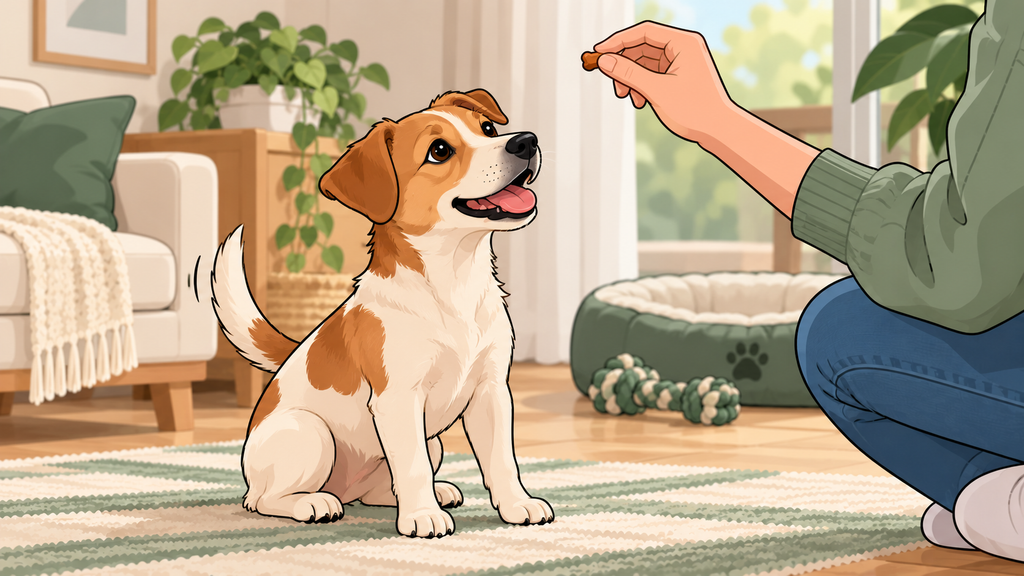
Have a few small, dog-safe treats ready, or use another reward your dog particularly enjoys.
Avoid practicing when your dog is frightened, exhausted, or overwhelmed.
Step 3: Say the New Name Once
Wait until your dog is relaxed and not already looking directly at you.
Say the new name in a cheerful, natural voice.
For example:
“Max!”
If your dog turns toward you, immediately reward them.
If they don’t respond, make the exercise easier. Move closer, reduce distractions, or briefly attract their attention with a gentle sound.
Avoid repeating the new name over and over without any response.
Step 4: Reward Your Dog for Looking at You
When your dog looks toward you after hearing the new name, say “Yes!” and offer a treat.
This helps establish the connection:
New name → Attention → Positive experience
Practice a few times, then take a break.
You want your dog to enjoy the exercise rather than become frustrated.
Step 5: Practice in Different Places
Once your dog responds consistently in a quiet room, try another room.
Then practice in your garden or another calm, familiar outdoor location.
Gradually introduce distractions.
If your dog stops responding, return to an easier environment.
Remember that a dog who recognizes their new name indoors may not immediately respond outdoors.
Step 6: Use the New Name Consistently
Ask family members to use the same name during training.
Avoid introducing several additional nicknames while your dog is still learning.
Continue rewarding good responses, especially in challenging situations.
Over time, your dog can become comfortable hearing and responding to their new name.
Should You Use the Old Name and New Name Together?
Sometimes, especially when changing to a similar-sounding nickname, it can help to make the transition gradually.
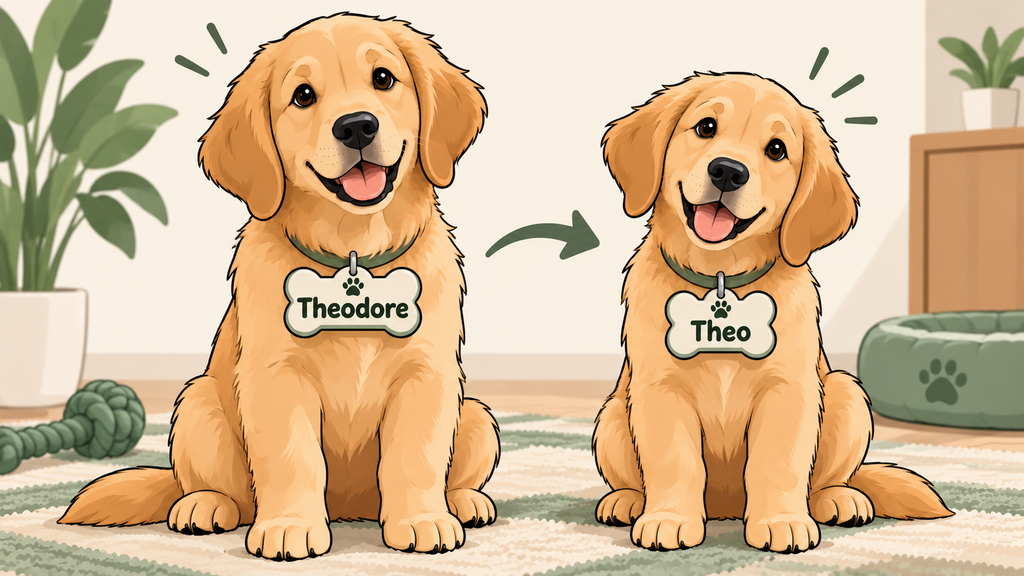
For example, imagine your dog is named Theodore and you’d like to call him Theo.
You could initially use the familiar name in a positive interaction, then introduce the shorter name during separate reward-based practice.
The important part is teaching Theo as a meaningful sound rather than assuming your dog automatically understands the abbreviation.
What About Completely Different Names?
Changing Charlie to Rocky is also possible.
The names don’t need to sound similar.
You can teach Rocky as a new attention cue using the same positive-reinforcement method.
The process may require more practice depending on the dog, their previous learning, and the environment.
Can You Rename an Older Dog?
Yes.
The idea that older dogs cannot learn new names is a misconception.
Adult and senior dogs can learn new associations, including responding to a different name.
However, the learning process varies between individuals.
A confident adult dog with a history of positive training may adapt relatively quickly.
A dog who is anxious, newly adopted, or struggling with hearing loss may need a different approach.
If your older dog suddenly stops responding to familiar sounds, speak with your veterinarian before assuming the problem is their name.
How Long Does It Take a Dog to Learn a New Name?
There is no fixed timeline.
Some dogs begin responding to a new name after a few short training sessions.
Others may need several weeks of consistent practice, particularly when distractions are involved.
Rather than measuring success by the calendar, watch your dog’s behavior.
Look for signs such as:
- Turning toward you when you say the new name.
- Responding without seeing a treat first.
- Recognizing the name in different rooms.
- Paying attention in mildly distracting environments.
- Responding consistently when different family members use the name.
These signs are more useful than expecting every dog to learn within a particular number of days.
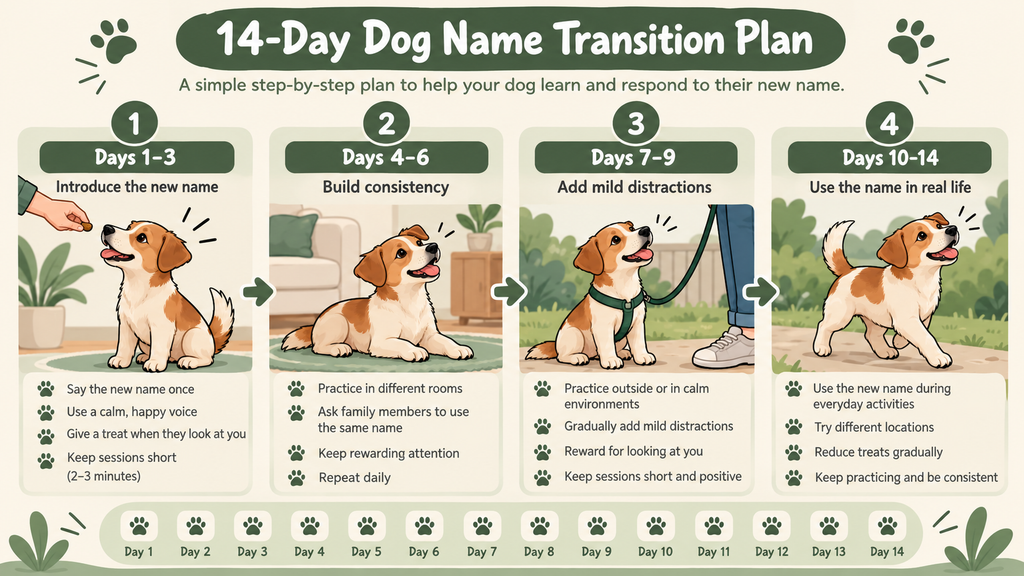
A Simple 14-Day Name Transition Plan
This plan provides a starting structure. Move at your dog’s pace and repeat any stage as needed.
| Days | Focus | What to practice |
|---|---|---|
| 1–3 | Introduce the name | Say the new name and reward attention in a quiet room |
| 4–6 | Build consistency | Practice short sessions in different rooms |
| 7–9 | Add mild distractions | Use a quiet garden or calm outdoor space |
| 10–12 | Everyday situations | Practice during relaxed daily activities |
| 13–14 | Review progress | Test the name in familiar environments and reward good responses |
Important: Fourteen days is a suggested practice schedule, not a guaranteed training period.
If your dog isn’t responding reliably, continue practicing at an easier level.
Can You Give Your Dog Multiple Nicknames?
Absolutely.
Many dogs learn to recognize several affectionate nicknames.
You might officially name your dog Oliver but regularly call them Ollie.
Or your dog might respond to both Bella and Belly.
The important distinction is between everyday affectionate language and a reliable attention cue.
During early training, choose one main name.
Once your dog consistently responds to it, you can introduce additional nicknames.
You may find that your dog naturally begins recognizing certain nicknames because they’re repeatedly associated with positive interactions.
Do Nicknames Confuse Dogs?
Not necessarily.
Dogs are capable of learning multiple sound associations.
However, constantly changing what you call a newly adopted or untrained dog may slow down the learning process.
Consistency is particularly helpful at the beginning.
5 Common Mistakes When Renaming a Dog
1. Changing the Name Repeatedly
Switching between several completely different names every few days makes it harder to establish a consistent response.
Choose one name and give your dog time to learn it.
2. Using the New Name Only for Corrections
If your dog mainly hears their new name when you’re frustrated, it may develop an unpleasant association.
Use their name during enjoyable interactions.
3. Expecting an Immediate Response Outdoors
A dog who responds perfectly in the kitchen may struggle in a busy park.
Build up distractions gradually.
4. Repeating the Name Constantly
Calling “Rocky! Rocky! Rocky!” without receiving a response doesn’t teach your dog what to do.
Say the name once, allow time to respond, and make the exercise easier if needed.
5. Confusing Name Recognition With Recall
Your dog’s name should primarily help get their attention.
A separate cue such as “come” tells your dog to approach you.
Teaching these as separate skills can make communication clearer.
For additional help, read our guide: Why Doesn’t My Dog Respond to His Name?
Frequently Asked Questions
Is it cruel to change a dog’s name?
Changing a dog’s name isn’t inherently cruel. Dogs can learn new names through positive experiences. Focus on making the transition gentle, consistent, and rewarding.
Can you rename a rescue dog?
Yes. Rescue dogs can learn new names, including names completely different from those they previously used. Give newly adopted dogs time to settle into their environment and avoid putting unnecessary pressure on them.
Will changing my dog’s name confuse them?
Your dog may initially respond more reliably to the old name, but that doesn’t mean the change will cause lasting confusion. Consistent, positive training can help them learn the new one.
Can a dog learn two different names?
Yes. Dogs can learn to recognize more than one name or nickname. It’s often easier to establish one reliable name first.
Should I choose a name that sounds similar to the old one?
You can, but you don’t have to. A similar-sounding name may make the transition feel easier in some cases, while a completely different name can also be taught successfully.
Can I change my dog’s name after five years?
Yes. Even dogs who have used the same name for years can learn a new one. Age alone doesn’t prevent learning, although individual health and hearing abilities should be considered.
What if my dog doesn’t respond to the new name?
Return to a quiet environment and reward small signs of attention. Check whether your dog is distracted, uncomfortable, or confused by inconsistent cues. If they also fail to respond to familiar sounds, consider a veterinary evaluation.
Final Thoughts: Your Dog Can Learn a New Name
Changing your dog’s name doesn’t have to be stressful.
Whether you’ve adopted a rescue dog, want a shorter nickname, or simply found a name that feels more meaningful, you can introduce it through patience and positive reinforcement.
The story of Benelux and Bennix is a lovely example of how a dog owner can adapt a familiar name to something that feels more natural in everyday life.
But every dog is different.
Some may respond to a new name quickly, while others need additional time and practice.
Choose a name you love, make it a positive experience, and let your dog learn at their own pace.
For more helpful advice, explore our Dog Naming Guides and Dog Name Training articles at Olei.net.
Have you ever changed your dog’s name? Tell us their old name, their new name, and how the transition went in the comments.
More Ways to Enjoy Life with Your Dog
Discover helpful dog-naming guides, creative inspiration, and thoughtful finds for dog lovers.
More Dog Name Inspiration
Explore more guides and ideas to help you find the perfect name for your best friend.

There’s Something Special About Your Dog’s Name
There’s Something Special About Your Dog’s Name Choosing a name for your dog is one of those little decisions…
Read Article
How to Choose a Unique Dog Name: A Creative Guide for Your New Best Friend
How to Choose a Unique Dog Name: A Creative Guide for Your New Best Friend Choosing a name for…
Read Article
How to Use Your Dog’s Name Correctly: 4 Smart Training Tips
How to Use Your Dog’s Name Correctly: 4 Smart Training Tips Your dog’s name is more than something you…
Read Article
Should You Give Your Dog a Human Name? Pros, Cons & Funny Examples
Should You Give Your Dog a Human Name? Pros, Cons & 25 Funny Ideas Imagine walking through a quiet…
Read Article
Dog Name Lab
Explore name ideas, discover different naming styles, and find inspiration for your dog’s perfect name.
Explore Name Lab
The Olei Shop
Discover dog-inspired products, thoughtful gifts, and fun finds for you and your four-legged companion.
Explore the Shop